
Law, Policy, and Action: COP30’s Shift in Climate Diplomacy
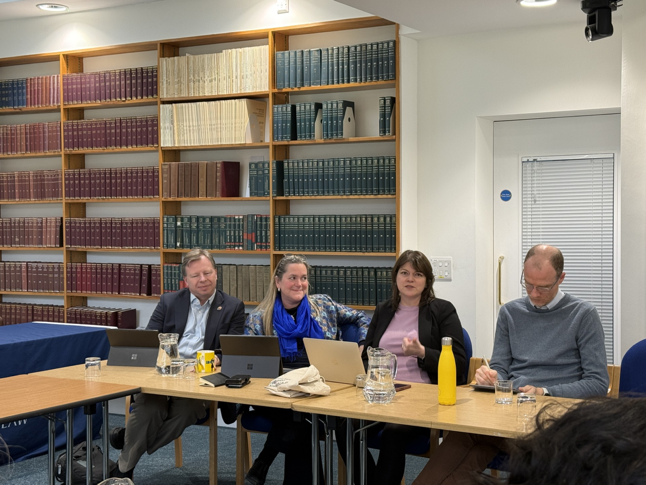
“…holding a COP at the edge of the world’s largest rainforest have, of course, symbolic weight and (also) practical significance. The Amazon is not only a vital carbon sink, it’s a living reminder that the climate crisis is inseparable from biodiversity protection, and (also) multi-level stewardship, which includes, effectively, the local level.” Prof Alessandra Lehmen (President, Enviro Law Commission, OAB/RS / Member, Brazilian Bar Federal Climate Change Commission)
International environmental and climate lawyer, Professor Alessandra Lehmen highlights COP30 as a pivotal moment for climate governance, taking place after the world surpassed the 1.5°C threshold and hosted in the Amazon. She notes a shift from negotiating new commitments to focusing on implementing existing ones, with Nationally Determined Contributions showing some progress but overall ambition still falling short.
Emphasizing the growing role of law, she points to climate commitments increasingly embedded in domestic legislation, regulatory systems, and judicial oversight, as well as the rising influence of international advisory opinions on state responsibility and policymaking. COP30’s implementation-focused approach, she suggests, may define the next phase of climate diplomacy—prioritizing practical action over text-based negotiation.
Prof Alessandra Lehmen is the President of the Brazilian Bar Environmental law Commission, Rio Grande do Sul State Chapter, a member of the Sao Paulo and Federal Bar Climate Change Commissions and serves as Board member of federal, state, and city climate and environmental councils in Brazil.
Listen to the opening message of Prof. Alessandra Lehmen on key outcomes of UNFCCC COP30 and their significance for international law and governance.
Stronger Commitments, Law, and Governance: Driving Real-World Climate and Biodiversity Impact
“…addressing the planetary crisis requires not only stronger commitments, but also stronger legal frameworks, institutional coherence, and practical implementation mechanisms.”Adv Ayman Cherkaoui (Lead Counsel, CISDL / Director, Hassan II Intl Centre for Enviro Training / Deputy Chair, IUCN World Commission on Environmental Law IUCN WCEL)
CISDL Lead Counsel for Climate Change, Adv. Ayman Cherkaoui underscores the urgency of strengthening environmental law and governance following key global milestones, including UNFCCC COP30 and the 2025 IUCN World Conservation Congress. While noting progress under the Kunming–Montreal Global Biodiversity Framework, he highlights the need for stronger legal frameworks, institutional coherence, and effective implementation.
Emphasising the interdependence of climate, biodiversity, and sustainable development, he calls for global commitments to be translated into enforceable national action. Legal innovation, litigation, capacity-building, and international cooperation, he stresses, are critical to turning ambition into real-world impact.
Adv Ayman Cherkaoui is the Director of the Hassan II International Center for Environmental Training and holds the position of Deputy Chair of the IUCN World Commission on Environmental Law (IUCN WCEL). He also served as a Special Advisor for Climate Change and Negotiations to the COP22 Presidency.
To listen to his insights on how the key outcomes of the UNFCCC COP30 and IUCN WCC 2025 set the stage for the CBP COP 17 and UNFCCC COP 31 in 2026, please watch this video.
Law in Action: Turning Climate and Biodiversity Commitments into Results
“In a period of rapid environmental change and the geopolitical uncertainty… Law is possibly the most powerful tool you have to build trust, mobilize capital for change, and protect the public interest. When used well, it does not slow transition, it rather makes it possible.” Adv Michael Strauss (General Counsel, European Bank for Reconstruction and Development (EBRD))
EBRD General Counsel Mike Strauss highlights the critical role of law and governance in turning global climate and biodiversity commitments into tangible action. Speaking from the EBRD, he emphasizes that implementation—through national legislation, regulatory frameworks, and institutional mandates—is now the key challenge for sustainability. He stresses the need to integrate climate, nature, and development law, aligning legal frameworks with NDCs, biodiversity targets, and financial regulations to enable coherent markets and capital flows. Lawyers, he notes, are central as architects of solutions, shaping legislation, contracts, safeguards, and accountability mechanisms that drive systemic transitions. Looking ahead to COP17, partnerships between MDBs, legal professionals, civil society, and Indigenous communities will be essential to deliver a just and effective path to a sustainable future.
Adv. Mike Strauss is an experienced legal professional with a distinguished career in international development finance and public policy. He has served on the Board of the Asian Development Bank and as Senior Advisor for International Finance at the U.S. Treasury, where he worked on global financial and development issues. He currently serves as General Counsel of the European Bank for Reconstruction and Development (EBRD), where he leads legal strategy and supports the institution’s mission to advance sustainable, market-oriented transitions.
From COP30 to Action: Legal Pathways for Climate Implementation and Accountability
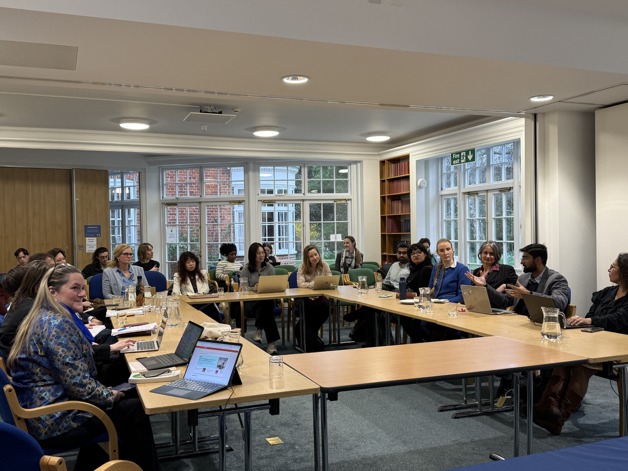
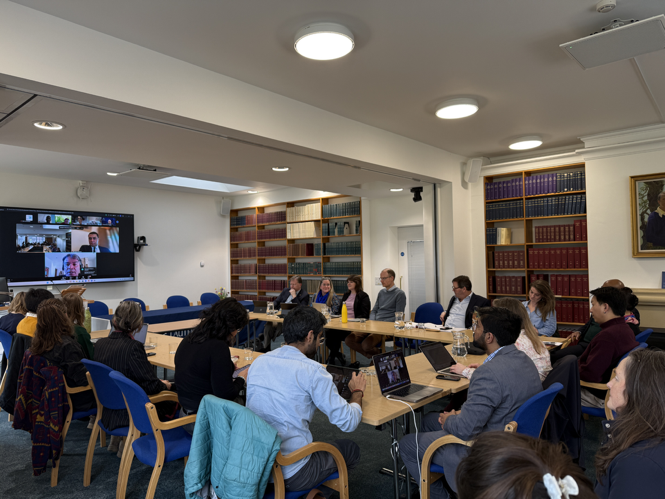
Legal professionals from both practice and academia examine how the outcomes of UNFCCC COP30 (2025) are shaping the implementation of the Paris Agreement and the next generation of Nationally Determined Contributions (NDCs), with particular attention to climate justice and the SDGs in the evolving post-COP30 landscape. They highlight key developments from COP30, including the adoption of 59 adaptation indicators under a global resilience framework, and assess their implications for translating global commitments into effective national action. They explore emerging governance approaches such as trade–climate linkages, initiatives on tropical forests and fossil fuel phase-out, and the growing role of plurilateral agreements and coalitions in bridging international ambition with domestic implementation. While the COP agenda continues to expand—encompassing oceans, methane reduction, biodiversity, and regional priorities such as the Amazon— they caution that this breadth risks fragmentation without coherent and integrated legal frameworks at the national level. The discussion underscores the centrality of climate justice and the SDGs, calling for stronger accountability grounded in international legal developments, alongside urgent action to address persistent gaps in climate finance and transparency, including uncounted military emissions. Ultimately, they emphasize that delivering on climate goals requires enforceable domestic laws, innovative policy tools, adequate financing, and inclusive accountability mechanisms that reach and protect vulnerable communities worldwide.
Experts include Prof Markus Gehring (Prof, Univ Cambridge / Lead Counsel, CISDL); Adv Ayman Cherkaoui (Lead Counsel, CISDL / Director, Hassan II Intl Centre for Enviro Training / Deputy Chair, IUCN World Commission on Environmental Law); Adv Railla Puno (Coordinator, CLGI) as chairs and Prof Joao Daniel Macedo Sa (Prof, PPFG-UFPA Law); Prof Leonardo de Camargo Subtil (Univ Caixas do Sul); Adv Mara Wendebourg (Lawyer, Legal Response International); Adv Himanshu Pabreja (Coordinator, CLGI); Adv Emily Morison (Project Lawyer, International Bar Association); Adv Bianca Miranda (LLM Candidate, Queen Mary University; Consultant, EBRD); Adv Elliot Njejimana (Moderator, REJEAC); Prof Layla McClaskey (Prof, Res Collective on Advanced Studies Energy Transition (NEATE), FGV Rio Law); Prof L Pushpa Kumar (Prof, Univ Delhi); Adv Maria de Arcos Tejerizo (Lawyer, Madrid Bar); Dr Pedro Schilling de Carvalho (Asst Prof, Univ College London); Adv Ana Chagas (IBA Water Law Comm); Adv Done Yalcin (Senior Partner, CMS); Adv. Gozde Kuscuoglu (Partner, BTS-Legal) as intervenors.
Listen to the roundtable discussion on Climate Law and Governance Post COP30.
Please refer to this LINK for more insights from the CISDL.
Please refer to this LINK for more insights from the biodiversity roundtable discussion.